Project Tag: Gateways
GATEWAYS
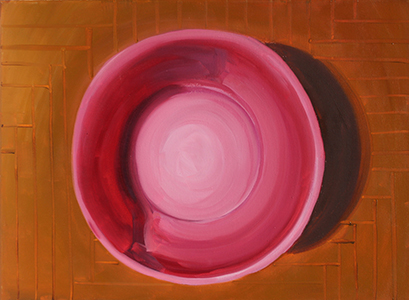
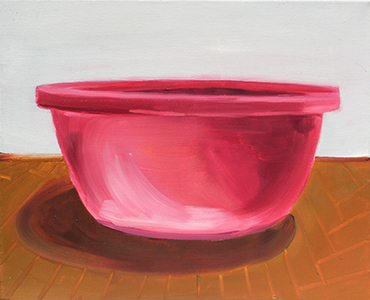
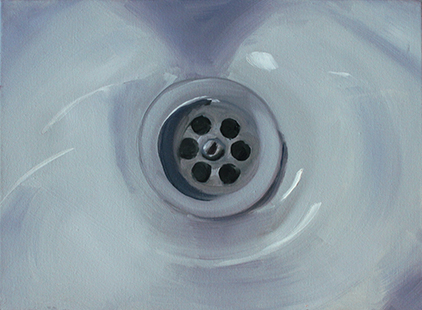
The series, consisting of twelve relatively small-scale paintings, is composed of loosely interpreted, subjective circular associations.
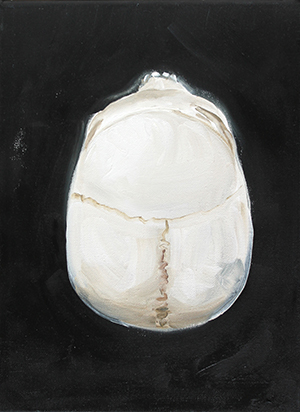
The drain, the basin, the egg, the skull, the lampshade, the toilet bowl, and the ring—all embody circularity. The circle can be a sign of totality and infinite freedom, or a never-ending trap and perpetual repetition.
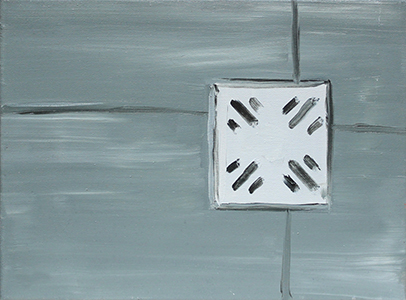
The floor drain, with its rectangular cover, might seem to break the sequence, but the bathroom setting and the pipe beneath the cover connect the flow of associations. The hand symbolizes a kind of wholeness (the protecting, caring hand, the hand of providence), and with this wholeness, we return once again to the association of the circle. The drain and the sewer evoke negative thoughts, much like the skull as a representative of vanitas and memento mori. Similarly, the top-down views of bathroom elements serve as ambivalent embodiments of womanhood, the female existence, female genitalia, and sexuality. The top-down view of the toilet bowl evokes associations of the “egg” or the “woman with her child.” While the egg symbolizes creation and childbearing, and the ring represents marriage and responsibility, the lamp and the hand remain symbols of hope—until the ring falls into the drain, the light bulb burns out, the egg spoils or shatters, or it is revealed that the hand is not real, but plastic.
The title, “Passageways” (Átjárók), points toward transcendental content. Passageways, but to where? To a better or perhaps a worse place, opportunity, or even a different life? Into rationality, into an adult life of responsibility and decision-making, or into an escape, a delirium? (The toilet bowl, the sink, and the basin serve as symbols of being sick, yet they also evoke the bathroom as a place of washing, purification, and renewal). To complicate matters, the passageway is sometimes closed by a barrier (such as a drain plug or the basin itself).
This series of paintings was built intuitively, not as an illustration of the thought process outlined here. At the same time, this is a kind of retrospective, summarizing creative reading—an interpretative play with the series, asking myself: what could these images truly mean to me?