EN/
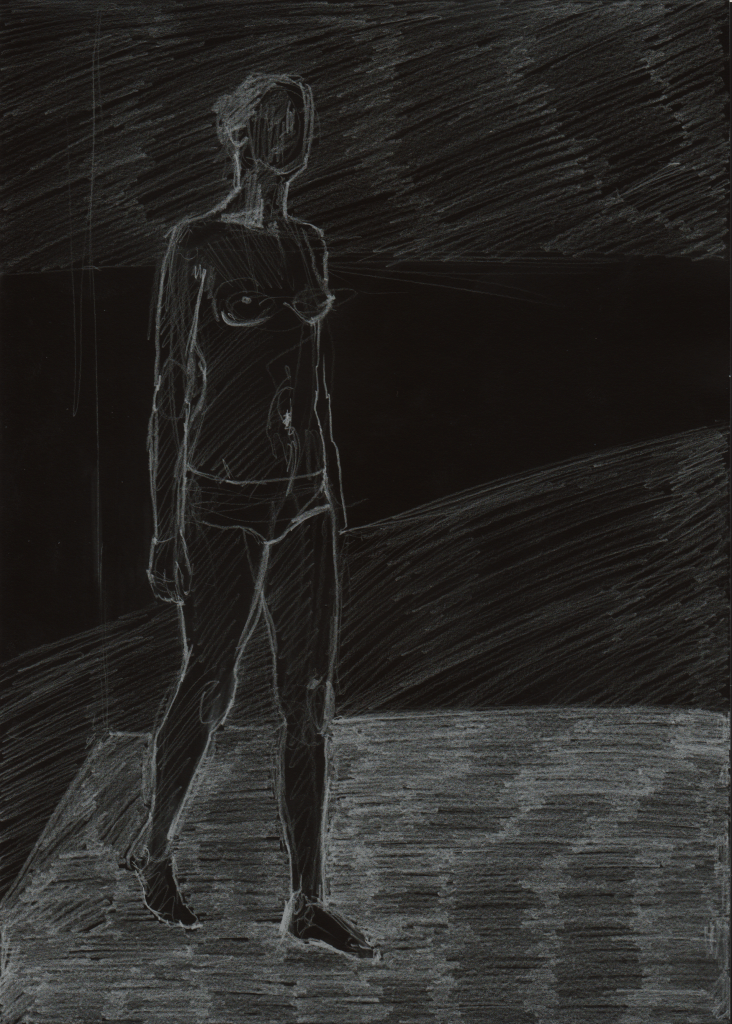
In the animation titled “Wanderer” (Bolyongó), we see a naked figure walking in circles day and night with Sisyphus-like persistence. The act of walking in circles evokes the ritualistic nature of a round dance, as well as the concept of the Danse Macabre (Dance of Death). We often engage in aimless pacing during difficult, contemplative situations, hoping that the continuity of movement will provide the answer to our questions.
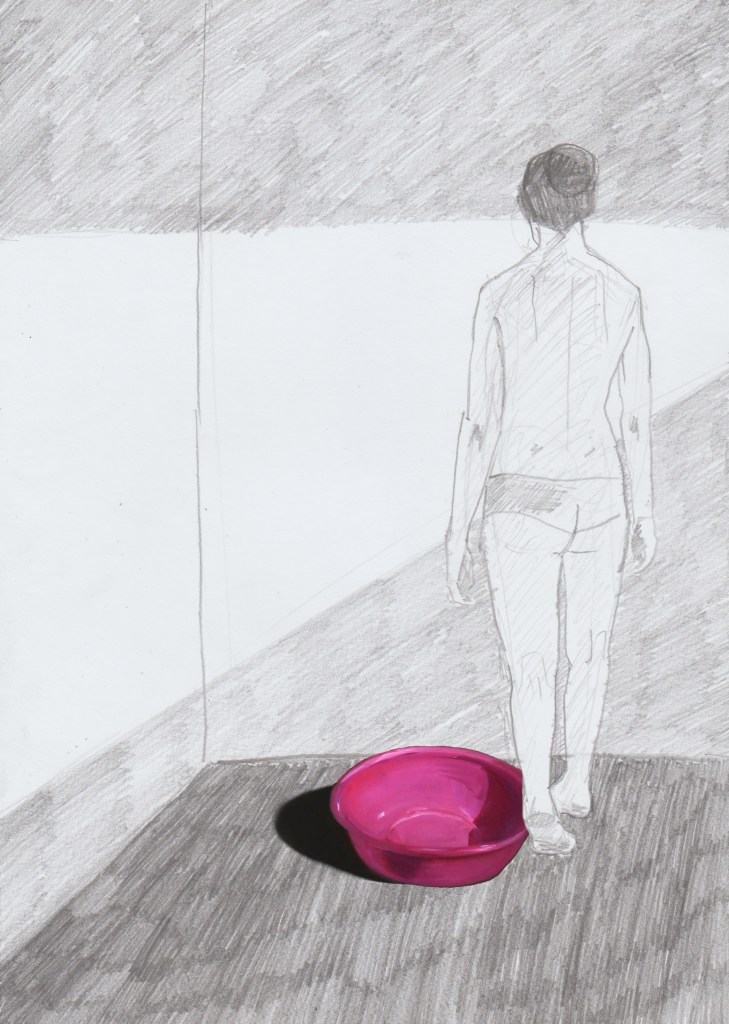
The second version, “Wanderer II,” does not differ much from the first, yet it contains a crucial shift: the figure, a naked woman, now treads her endless laps around a pink plastic basin. The basin may refer to feminine principles or, in itself, to that specific problem which the figure refuses to “step into”—one that she continually circles but never confronts.


HU/
A Bolyongó című animációban egy meztelen alakot látunk, aki éjt nappallá téve, Sziszüphoszi kitartással körbe-körbe jár. A körbe járkálás aktusa megidézi a körtánc rituális jellegét, valamint a haláltánc fogalmát is. A céltalan járkálást mindig valamilyen nehéz, elgondolkodtató helyzetben tesszük, bízva abban, hogy a mozgás folyamatossága megadja a választ a kérdésünkre.
A Bolyongó második változata (Bolyongó II.) sem sokban különbözik az elsőtől, de semmiképp sem lényegtelen momentumban, ugyanis az alak, a meztelen nő immár egy rózsaszín lavór körül rója végeláthatatlan köreit. A lavór utalhat a női princípiumokra, vagy önmagában arra a bizonyos problémára, amibe az alak “nem lép bele”, amit folyamatosan csak kerülget.
